
Prerequisites for a Successful FP&A Tool Adoption
Implementing a modern FP&A tool can transform finance from a reactive reporting function into a strategic business partner. Yet, as many CFOs and FP&A leaders know, technology alone doesn’t guarantee success.
Plenty of companies invest in powerful FP&A platforms—only to see adoption stall, processes remain manual, and stakeholders revert back to Excel. Why? Because the success of any FP&A tool depends less on the software itself and more on the foundations laid before and during implementation.
Let’s explore the key prerequisites for making FP&A tool adoption not just possible, but powerful.
1. A Clear Problem Statement and Vision
Jumping into tool selection without clarity is one of the biggest pitfalls. Companies often say, “We need a planning tool”—but why?
A successful adoption starts with a clear problem statement:
- Is the issue too much time spent on manual consolidation?
- Is forecast accuracy too low?
- Is there no visibility across business units?
Alongside this, leaders need to articulate a vision: “We want a system that enables rolling forecasts, real-time visibility, and collaborative planning across geographies.”
Without clarity on the “why,” even the best tools will fail to deliver.
2. Data Readiness and Governance
FP&A tools thrive on clean, consistent, and accessible data. If the underlying data is fragmented or unreliable, the tool will only automate bad outputs.
Key steps before adoption:
- Standardize chart of accounts, cost centers, and reporting hierarchies.
- Define ownership: who maintains master data, and how often is it updated?
- Cleanse historical data to set a reliable baseline.
Think of it as laying the foundation before building the house. Without strong data governance, even the slickest dashboards will lose credibility.
3. Stakeholder Alignment and Buy-In
FP&A tools impact not just finance, but the entire organization—sales, operations, HR, supply chain. Their inputs drive the models, and their trust in outputs drives adoption.
Prerequisites for alignment:
- Involve cross-functional stakeholders early in tool selection.
- Run workshops to understand their pain points and requirements.
- Position the tool as a shared platform for decision-making, not just a finance toy.
If stakeholders don’t feel ownership, they’ll revert to their old spreadsheets the moment friction arises.
4. Process Standardization Before Automation
One of the golden rules: don’t automate chaos.
If budgeting, forecasting, and reporting processes are inconsistent or undefined, a tool will only amplify the confusion. Before implementing, FP&A leaders should:
- Document current processes and identify bottlenecks.
- Standardize workflows (e.g., how sales submits forecasts, how HR provides headcount plans).
- Agree on planning cadence—annual budgets, rolling forecasts, monthly updates.
The tool should automate well-designed processes, not replace discipline.
5. Executive Sponsorship and Change Management
FP&A tool adoption is as much a cultural transformation as it is a technical one. It requires executive sponsorship to:
- Champion the initiative at the leadership level.
- Provide funding and resource commitment.
- Set the tone that “this is how we plan now.”
Equally critical is structured change management:
- Training sessions tailored for finance and non-finance users.
- “Early adopters” who act as tool ambassadors in each function.
- Ongoing support to build confidence and reduce resistance.
Without leadership push and proper change management, adoption will plateau.
6. Phased Implementation with Quick Wins
Trying to implement every feature at once is a recipe for frustration. Successful projects adopt a phased approach:
- Start with core processes (budgeting, management reporting).
- Deliver quick wins—like automating monthly reports—to build momentum.
- Gradually expand into driver-based forecasting, dashboards, and scenario planning.
This reduces risk, builds trust, and demonstrates ROI early.
7. Strong FP&A Team Capability
Finally, the best tool is only as strong as the team behind it. A powerful FP&A platform requires:
- Finance professionals skilled in modeling and storytelling.
- Analysts who understand business drivers beyond the P&L.
- Team members willing to learn, adapt, and use the tool proactively.
Without a capable FP&A team, the tool risks becoming a glorified reporting engine instead of a strategic enabler.
Case Example: Global Consumer Goods Firm
A $2B consumer goods firm implemented a leading FP&A platform with mixed results. In its first year, adoption was patchy. Business units complained that outputs didn’t match their expectations, and finance spent months reconciling numbers manually.
On review, the root causes became clear:
- Data hierarchies weren’t standardized across regions.
- Business units were never involved in the design phase.
- Processes varied—some regions did rolling forecasts, others stuck to annual budgets.
In year two, the company reset:
- FP&A partnered with IT to clean master data.
- A steering committee with business leaders shaped tool configurations.
- Processes were harmonized before re-automation.
The result? Within 18 months, budgeting cycles were cut by 50%, rolling forecasts were adopted globally, and FP&A was recognized as a strategic advisor rather than a reporting bottleneck.
Prerequisites Summarized
To ensure successful FP&A tool adoption, organizations must prepare the ground:
- Clear Vision: Define problems and objectives upfront.
- Data Readiness: Standardize and cleanse for consistency.
- Stakeholder Buy-In: Involve non-finance users early.
- Process Discipline: Standardize before automating.
- Executive Sponsorship: Drive culture change from the top.
- Phased Rollout: Deliver quick wins before expanding.
- Team Capability: Build a skilled FP&A function to leverage the tool.
Final Thought
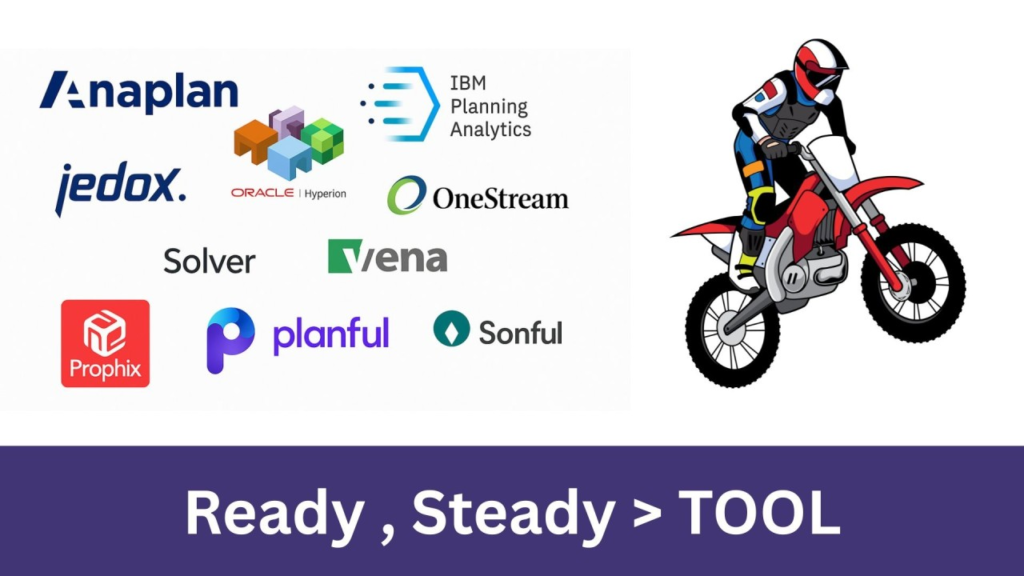
A powerful FP&A tool is not a magic wand—it’s an amplifier. It amplifies good processes, clean data, and collaborative culture into transformative results. But if those prerequisites aren’t in place, it will only amplify confusion.
The difference between disappointment and transformation lies not in the tool itself, but in how well the organization prepares for it.